Buying clothes online has one stubborn problem: you cannot see them on yourself. AI try-on is an attempt to fix that. You upload a photo, choose a garment, and the AI produces a picture of you wearing it. Here is what is going on, without the jargon.
What the AI is given
- A photo of a person, ideally standing, well lit and facing the camera.
- An image of a garment, shown clearly on its own or on a model.
What it does with them
- 01It finds the person. The model works out the body's pose and outline: where the shoulders, arms, waist and legs are.
- 02It understands the garment. It reads the shape, the pattern and the way the fabric hangs.
- 03It fits one to the other. The garment is reshaped to follow the person's pose.
- 04It paints the result. A generative image model draws a new picture: the same person, the same background, wearing the new garment, with folds and shadows that match.
The last step is why try-on has improved so quickly. Older systems pasted a flat garment over a photo. Modern ones generate the whole image, so the fabric appears to wrap around the body.
What makes a good result
- A clear, well-lit photo with the whole outfit area visible.
- A simple pose: standing, arms slightly away from the body.
- Nothing covering the body, such as a bag or crossed arms.
- A clean garment image with the full design in view.
What it cannot promise
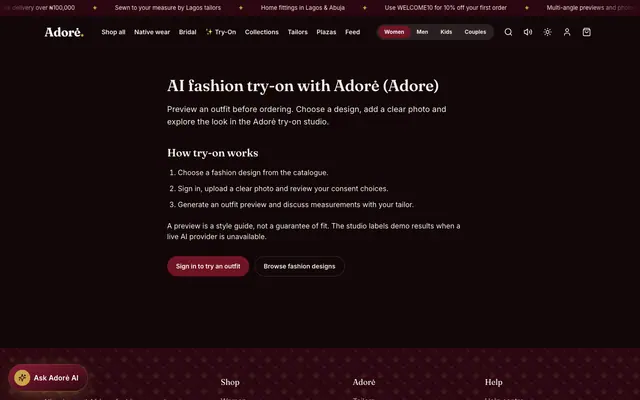
A try-on image is a picture of how an outfit might look. It is not a measurement. It cannot tell you whether a sleeve is the right length or whether a waist will fit. In Adorė the Try-On Studio says so directly: a preview is a style guide, not a guarantee of fit. Fit comes from measurements, which is why Adorė pairs try-on with measurements for the tailor and fittings.
Being straight with the shopper
Three rules apply to any try-on feature we build:
- Ask before using a photo. The shopper reviews their consent choices before a photo is used.
- Label the result. If a result is a demo because a live AI provider is unavailable, the product says it is a demo.
- Keep it a preview. The image helps someone choose a style. The order is still made to their measurements.
Why it matters for made-to-measure
For fashion that is sewn to order, a shopper commits before the garment exists. Try-on closes part of that gap: they see the design, in their chosen colour, on themselves, before a tailor cuts the fabric.